What the edge actually is
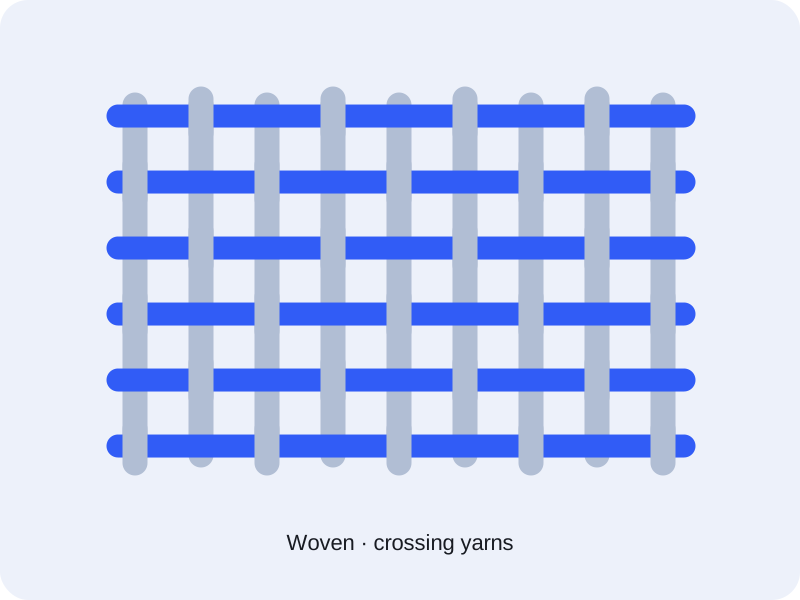
On a shuttle loom, a single continuous weft thread is carried back and forth across the warp by a shuttle. At each side it turns around and comes back, so the edge is self-bound and cannot fray. That's the selvedge — a contraction of "self edge".
A modern projectile or air-jet loom fires a separate length of weft across for every pass. It's much faster and each pass leaves a cut end, so the edges have to be overlocked or bound later. Same fabric structure, no self edge.
The coloured line you often see in the selvedge band is a mill signature. Historically it identified whose cloth it was; now it's mostly aesthetic, and it's the detail people cuff their jeans to show.
What it costs
Two things, and they compound.
Speed. A shuttle loom runs at a fraction of the rate of a modern loom. Fewer metres per hour at similar overhead means a higher price per metre before anything else is considered.
Width. Shuttle looms produce a narrow cloth, typically around 75 cm against 150 for a modern loom. Narrow cloth wastes more in the marker — pattern pieces nest less efficiently on a narrow width, so you buy more metres per garment. That's why selvedge jeans traditionally have the selvedge running down the outseam: it's the cutting layout the width forces, turned into a feature.
The honest claim, and the dishonest one
Honest: selvedge denim came off a shuttle loom, has finished edges, and is narrower. It correlates with better denim, because shuttle looms are slow and mills that keep them running tend to be doing careful work with better yarn.
Dishonest: that selvedge means better. The edge proves the loom and nothing about the yarn, the dye, the finishing or the cotton. A badly spun selvedge denim is worse than a good projectile-loom denim, and both exist on the market.
It's worth being precise about this if you're building a brand on it, because the customers who care about selvedge are exactly the customers who will know if the claim is stretched.
Selvedge, raw, and unsanforised are three different things
They arrive together in marketing copy and they're independent decisions:
| Term | Means | Consequence |
|---|---|---|
| Selvedge | Woven on a shuttle loom | Finished edges, narrow width, higher price |
| Raw | Unwashed after dyeing | Stiff, dark, fades where you crease it |
| Unsanforised | Not pre-shrunk | Loses 5–10 % in length on first wash — must be sized for |
Unsanforised is the one that hurts if it's missed. A 5 to 10 % length loss on a 105 cm inseam is 5 to 10 cm, which is the difference between a fit and a return.
Editorial page. No denim in the Clothix library — the current reference profiles cover knits, and wovens are a later phase. What we cover and when.
Questions
What is selvedge denim?
Denim woven on a shuttle loom, where one continuous weft thread turns back at each edge instead of being cut. That leaves both edges finished and self-bound, so they cannot fray — the visible band you see on a turned-up cuff.
Is selvedge denim better quality?
Not by itself. The clean edge proves the loom, not the yarn or the dye. Selvedge correlates with better denim because shuttle looms are slow and mills use them for careful work — but a poorly spun selvedge is worse than a good projectile-loom denim.
Why is selvedge denim more expensive?
Shuttle looms run at a fraction of the speed of a modern projectile loom and produce a narrower cloth, typically 75 cm against 150. So you get less fabric per hour and waste more of it in cutting, and both show up in the price.
Denim weights and twill direction · how jeans are made · twill weaves · all fabric structures