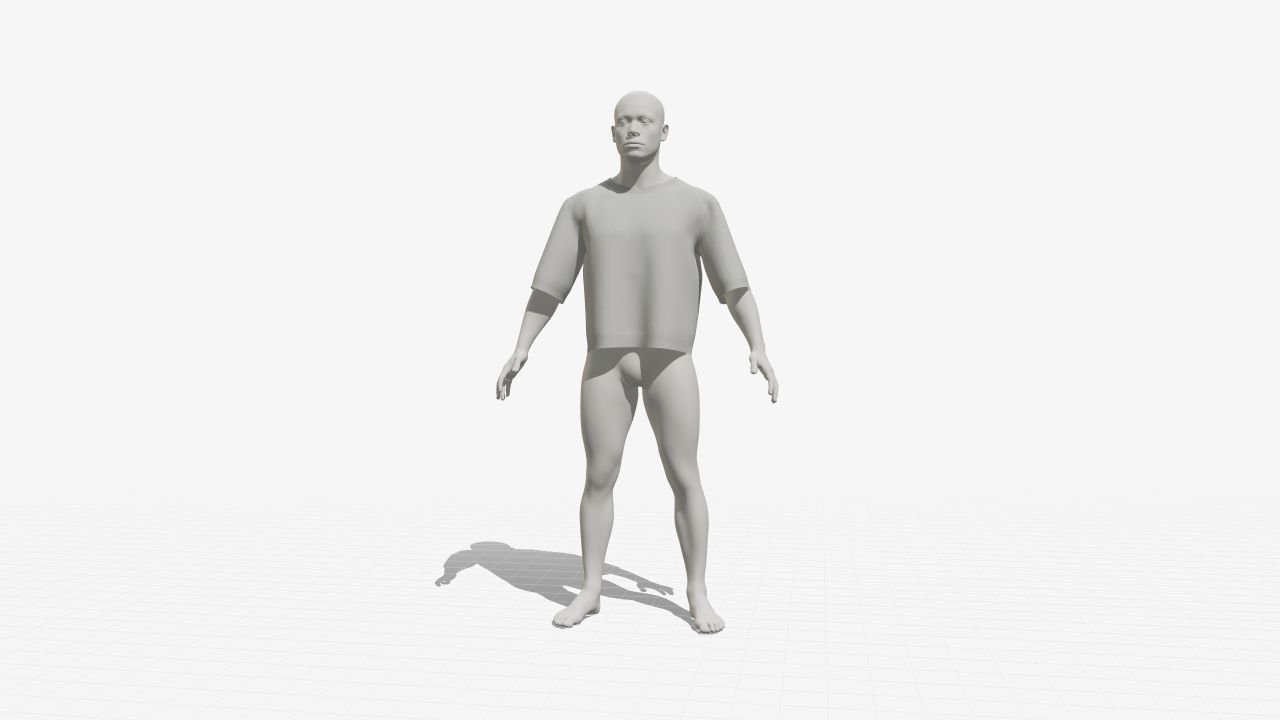
Boxy is a body decision
Boxy means the body is wide relative to its length, with straight side seams and no waist shaping. It's a ratio: a boxy tee runs 4 to 6 cm wider in the chest and around 4 cm shorter in the body than a regular fit of the same size.
What it needs from the fabric is weight. A boxy pattern in a 150 g/m² jersey collapses onto the body and reads as a badly fitting t-shirt. The same pattern at 200 to 220 holds its own line and reads as intentional. This is the clearest case where GSM changes the design, not just the hand.
Drop shoulder is a sleeve decision
The shoulder seam is moved down the arm, past the shoulder point. The body panel gets wider to reach it, the sleeve gets shorter and straighter, and the armhole becomes a shallow curve instead of a deep one.
It's independent of boxy: you can drop the shoulder on a regular-width body and get a relaxed shoulder with a normal chest. What it does need is armhole depth — the extra fabric has to go somewhere, and if the armhole is shallow the garment binds when arms lift. Set-in, raglan and drop shoulder compared.
Oversized is a size decision
Oversized means wearing a larger size than your measurements — or a pattern graded so a nominal M measures like an L. Which makes it the least precise of the three, and the one most worth avoiding on a tech pack. "Oversized" tells a factory nothing; a chest measurement tells it everything.
If oversized is your brand's fit, the honest version is to shift the size labels: your M has an L's chest, and the size chart on your site says so. Trying to express it as a fit adjective produces exactly the argument that sizing charts exist to prevent.
What to write instead
| You want | Spec it as |
|---|---|
| Boxy | Chest +5 cm and body length −4 cm from your regular fit, straight side seams, sweep = chest |
| Drop shoulder | Shoulder-to-shoulder +4 cm, plus where the seam should land relative to the shoulder point, plus a deeper armhole |
| Oversized | The actual chest measurement you want. Then decide what to call the size on the label. |
| All three | All of the above, and expect the first sample to be bigger than you pictured |
The neck, which decides more than the fit does
Whatever the body does, the neck is where a t-shirt ages well or badly. Three numbers: the neck opening, the rib width, and the ratio of the band length to the opening — usually 85 to 90 %. Plus back neck tape, which costs almost nothing and stops the shoulder line growing over a year of wear. The full eleven points of measure.
In Clothix
Body ease, length, shoulder position and sleeve proportions define a T-shirt silhouette. In Clothix, compare the supported models and size options, then review the available preview and measurements. Fabric reference profiles use estimated parameters; validate the chosen material and fit with a physical sample.
The t-shirt tech pack · jersey weights · yarn quality · sleeve types · the garment catalogue · how the drape works